


As night time temperatures drop and light sweaters come out of the deep part of the closet, homeowners begin to look to their fireplaces for comfort. And who can blame them? It’s the best part of the cooling off season: starting up the fireplace. But logic sets in and homeowner’s question…when was it cleaned last? How often does the chimney need to be cleaned?
A chimney needs to be professionally cleaned and inspected at least once a year, whether it’s for a wood burning or gas fireplace. Chimney sweeps remove flammable creosote, clear blockages left by nesting critters, and inspect that the chimney structure is fireworthy & good to go. Skipping the yearly service exposes you and your family to the risk of a chimney fire or carbon monoxide.
Why Annual Chimney Cleaning is a National Safety Standard
A fireplace brings warmth and a welcoming feel to any home. It also needs regular care to stay that way.
The National Fire Protection Association, (NFPA), sets the standard for chimney care in NFPA 211. It states that chimneys, fireplaces, and vents should be inspected at least once a year for soundness, freedom from deposits, and correct clearances. Cleaning and repairs should follow whenever the inspection calls for them.
The standard is supported by the Chimney Safety Institute of America, the National Chimney Sweep Guild, and International Residential Code. It applies equally to gas and wood burning fireplaces.
What is Creosote and Why is it Dangerous?
Wood burning fireplaces create a natural byproduct called creosote. As smoke rises through a chimney, creosote sticks to the inner walls in a dark, gummy layer.
According to State Farm, creosote forms from unburned gas vapors and expands quickly when exposed to heat. The more wood a household burns, the faster this layer builds up.
Why does the insurance company care? It’s because creosote is highly flammable and can ignite at around 451 degrees Fahrenheit. Once it catches fire, the temperatures can quickly reach up to 2,000 degrees Fahrenheit in a matter of minutes.
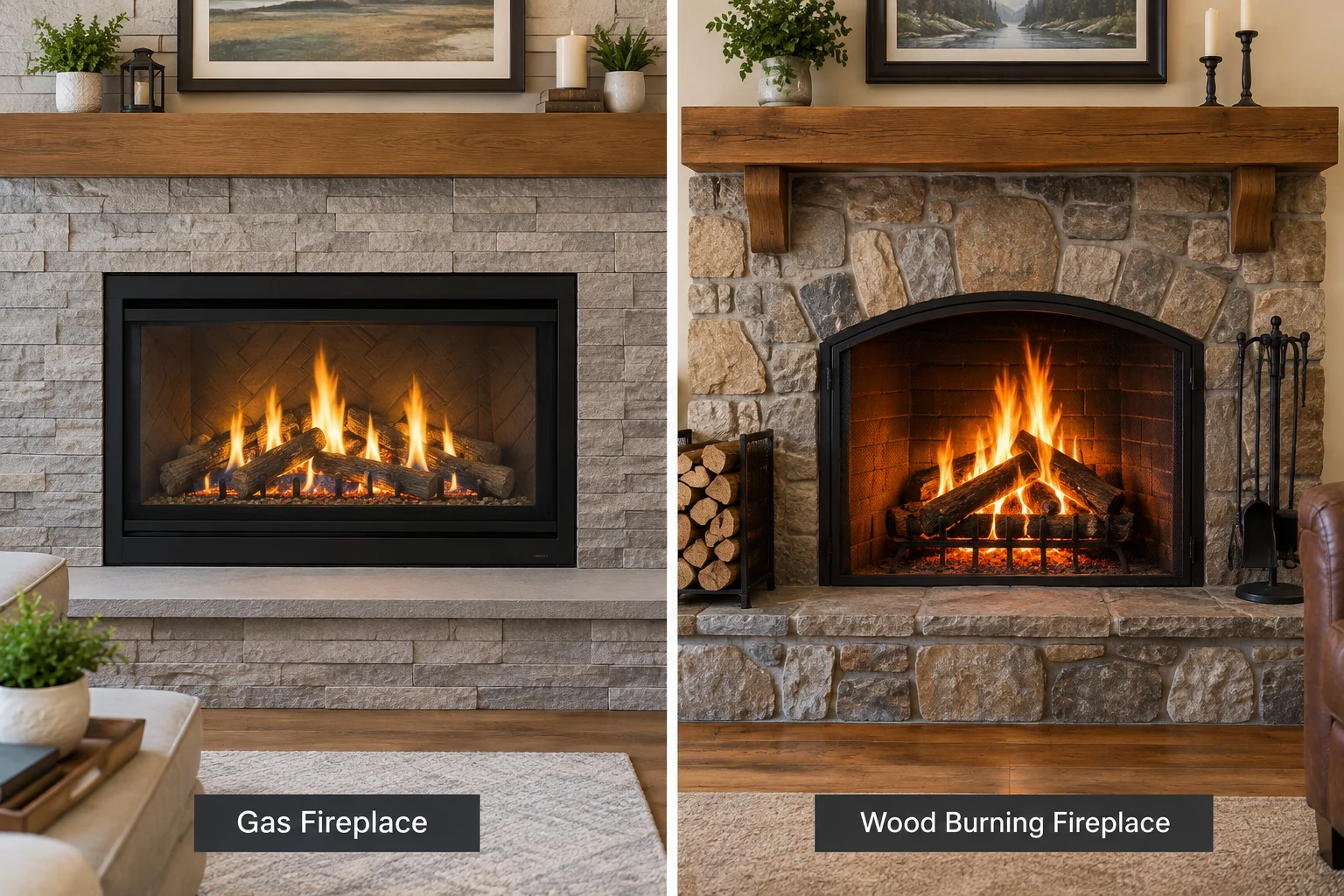
What’s the Difference Between a Gas Fireplace and a Wood Burning Fireplace?
Why both fireplaces need a good cleaning and a yearly inspection. There are significant differences.
Wood burning fireplaces build up creosote over time. Gas fireplaces can release carbon monoxide when the venting is not working correctly. Some older wood fireplaces that were converted to gas still rely on the original chimney, which adds another layer of potential problems that may be worth checking.
Fireplace Type Risk Comparison
Fireplace Type | Primary Risk | Key Maintenance Focus |
Wood burning | Creosote buildup, Carbon monoxide, chimney fire | Fire clay flue liner, smoke chamber, throat / damper, firebox firewall condition, |
Gas (converted chimney) | Carbon monoxide, venting issues, chimney fire | Vent path, fire clay flue liner condition, connections, smoke chamber, throat / damper |
Gas (vented or vent free) | Carbon monoxide | Exterior vent clearance and seal, connections |
How to Know if Your Chimney and Fireplace are at Risk
If you hear loud cracking or popping sounds from the chimney, or if you notice a sudden buildup of smoke in the room, or flames falling down into the fireplace, these are all signs of a chimney fire getting ready to happen. If you see any of these signs, it is best to get everyone out of the house and call 911 right away.
A good action plan for you and your family is to have a fire extinguisher on hand and a plan in the event a situation occurs when starting the fireplace for the season.
How Often Should the Chimney Be Cleaned?
Fireplaces benefit from a certified professional cleaning once a year at minimum. Some Superior Chimney customers get the chimney cleaned and inspected in the Fall, others prefer to get it done right away in the Spring and summer seasons.
Chimney Inspection Standards by Organization
Organization | Recommendation |
NFPA (National Fire Protection Association) | Inspect chimneys, fireplaces, and vents at least once a year |
CSIA (Chimney Safety Institute of America) | Annual inspection and cleaning by a certified sweep |
NCSG (National Chimney Sweep Guild) | Yearly service tied to safe operation standards |
IRC (International Residential Code) | Annual inspection built into residential code requirements |
State Farm Insurance | Yearly inspection, ideally scheduled during fall / spring home maintenance |
What a Certified Chimney Sweep Does
Superior Chimney uses a 14-Point Certified Written inspection with photo documentation that works as a guide and documents each cleaning. The chimney and fireplace inspection addresses the flue liner, smoke chamber, smoke shelf, damper, and firebox along with the exterior integrity of the chimney.
A certified technician can look up and down the inside of the chimney with a light searching for creosote, cracks, debris, missing tiles and animals, to name a few. Due to the size of the chimney flue, the certified technician will not be able to climb inside the flue.
To clean the chimney, a certified technician uses a variety of tools. They will use brushes and rods that pass through the system to clean the sides of the chimney walls. Any shaling fire clay tile, tile joints, or loose brick that fall down are a clear signal that there’s a potential problem with the integrity / fire-worthiness of the chimney. Catching this early is one of the most valuable parts of a chimney sweep.
A quality service such as Superior Chimney, also leaves the work area clean, with no soot tracked through the house during the cleaning and inspection process.
Why does the Certification Matter?
A licensed and certified chimney technician brings credentialed knowledge / experience and the tools, safety equipment, and training needed to clean a chimney accordingly.
The CSIA recommends working with certified technicians because they are tested regularly on the details of chimney and venting systems. That level of testing gives homeowners a much clearer picture of what condition the chimney is really in. Check out Superior Chimney’s many certifications here.
Chimney Blockages. What Causes it to Happen?
Some obstructions need a new chimney cap to prevent them from happening again. The most common obstruction / intrusions are birds, squirrels, bats and raccoons that nest in the covered and warm spot in your chimney. The next are the leaves, branches and berries that frequently end up in the chimney, especially if the chimney cap is missing or not secure. In the Chicagoland area, wind is always a factor and help contribute to these issues.
What to Ask a Credible Chimney Cleaning Company
Not every company that offers chimney cleaning carries the same level of training or photo documentation. A few quick questions can make the difference.
Homeowners should ask whether the technician coming to perform the service requested holds current CSIA certification, whether the visit includes a written inspection report, and whether photo documentation comes with the service. A company that answers yes to all three is giving a homeowner a real record to keep.
It also helps to ask what happens if the technician finds a structural issue during the sweep. A good company will explain the finding clearly and walk through the repair options before any work begins.
Prepare You Home for the Chimney Sweep
A little preparation on the homeowner helps.
Clear a path from the front door to the fireplace works to save time once the certified technician arrives. Next, move furniture, rugs, and decorative items away from the fireplace and off the mantel gives the technicians a safe space to work.
Keep pets in another room, since the sound of brushes and vacuums can cause pets to be startled. These small steps keep the appointment calm and clean for everyone in the house.
What Every Superior Chimney Sweep Includes
Remember, every chimney sweep from Superior Chimney comes with a free 14 point certified written certified inspection, complete with photo documentation that you’ll see on site and get sent to you by email.
All Superior Chimney technicians hold national certification through the Chimney Safety Institute of America. Each visit is built around the same three goals: confirming structural integrity and fire-worthiness, removing creosote and soot, and ensuring the system is free of any obstructions.
A technician may also flag other maintenance needing attention, depending on how often the fireplace gets used and what kind of system you have.
What is the Cost of Skipping a Chimney Sweep?
So, how often does the chimney need to be cleaned? Skipping a year of maintenance doesn’t show up as a problem right away. If you use a wood burning fireplace, creosote keeps building, small cracks keep widening, and a nest from last spring keeps sitting in the flue.
A yearly appointment costs far less than a single repair job, and it comes with the added benefit of a written record that documents the condition of the chimney system.
Scheduling a visit before the season starts is the best way to catch a problem while it is still small and easier to fix. Superior Chimney’s certified technicians bring the experience, training and the no mess approach needed to make that appointment for peace of mind.
Now you know the answer to how often does the chimney need to be cleaned?
Call 877-244-6349 to schedule a certified chimney inspection today!