


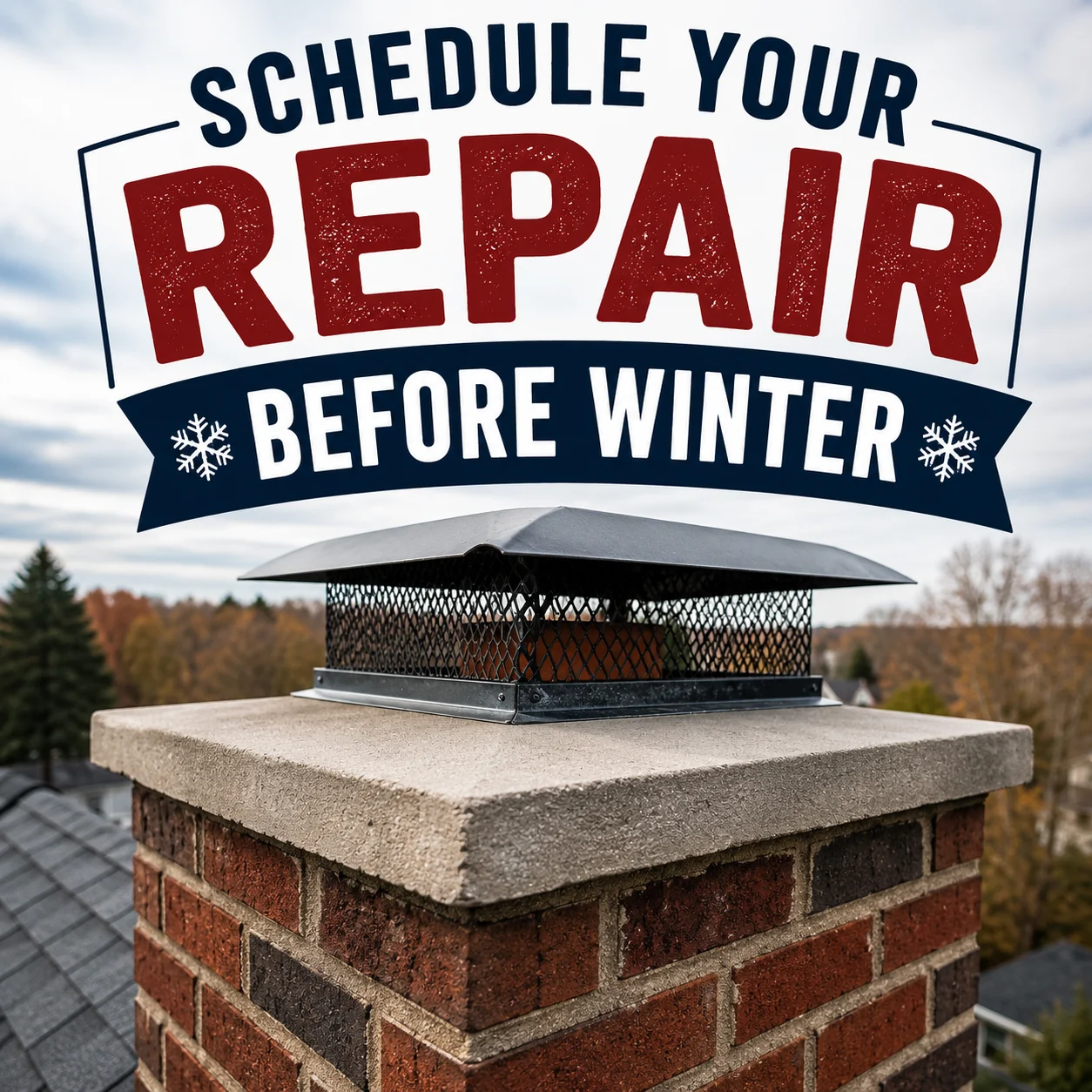
Why Right Now Is the Perfect Time to Schedule Your Chimney Top Repairs
Chimney top repairs seal cracks and/or damage done to the chimney crown using crown coat. Crown coat is a flexible elastomeric sealant that fills existing cracks, blocks water from entering the masonry and protects the entire chimney structure. With milder temperatures across the Chicagoland area right now, this is the ideal time to get chimney top repairs done before the freeze thaw winter season starts.
Now That You Know…
Now that you know what a chimney top repair means, let’s find out why it’s important. You know that your chimney sits at the top of your home, quietly dealing with rain, heat, wind and cold. The odds are that the chimney crown, or the concrete slab between the chimney and the chimney cap, have reached its peak and is showing signs of wear. Most homeowners might see the chimney on top of the house from time to time, but hardly even give the chimney crown any thought. Over time, the wear begins to rack up repairs and costs.
The good news is that, right now, the weather is on your side. Mild(er) temperatures this week make this one of the best times to schedule masonry work. And crown coat, the product used for chimney top repairs, cures best in these conditions.
What is a Chimney Crown?
The chimney crown is the cement slab that sits at the very top of your chimney. It spans the full width of the chimney and can extend beyond the bricks giving extra protection. The chimney crown doesn’t cover the flue opening, instead, it pokes through the center.
The chimney crown’s job is important. When it rains or snows, the water runs off the crown directing it away from the chimney. This way it stays away from the bricks and mortar joints underneath. When the chimney crown is able to do its job, the entire chimney system stays protected and dry. However, over time, the chimney crown can form hairline cracks which can widen over time. You can be sure that rain will find its way in, and everything underneath begins to deteriorate.
Here is something most homeowners are surprised to learn. The majority of old chimney crowns are built using standard mortar mix, the same material used to lay the bricks of the chimney itself.
What Causes Chimney Crowns to Crack
Your chimney is the highest point on your home. It is fully exposed to the weather elements in a way that few other parts of the home are. Heat expands the masonry during summer. Cold contracts it in winter. Water finds its way into small cracks, freezes, expands, and forces those cracks wider.
We’ve discussed the freeze thaw cycle, and it is relentless. Over time, what begins as a hairline crack, widens from the freeze thaw cycle allowing water to enter and travel down into the brick and mortar below the chimney crown.
Masonry is porous and absorbs water quickly if unprotected, meaning a Superior Chimney certified technician hasn’t sprayed the chimney with Chimney Saver. Once water reaches the masonry, deterioration chips away at the mortar weakening it over time. Bricks also deteriorate due to water. The process of a failing brick is called spalling and shaling. When the water leak matures enough, you’ll also find water stains on the ceilings and walls near the fireplace.
The Chimney Safety Institute of America (CSIA) consistently identifies water penetration as the primary driver of masonry chimney damage. According to CSIA guidance, a properly sealed and maintained chimney crown is an important line of defense against water damage in any masonry chimney system.
Signs Your Chimney Crown May Need a Chimney Inspection
- Visible cracks along the top surface of the chimney
- White chalky staining on the exterior bricks (called efflorescence)
- Water stains on ceilings or walls near the fireplace
- Flaking or spalling brick
- Mortar joints that are missing, crumbled
If you see any of these signs, schedule a professional chimney inspection before winter.
How Does the Crown Coat Solve Problems
Crown coat is a flexible sealant for chimney crowns. It goes by a few different names: chimney sealer, crown sealer, crown saver, or chimney top repair compound. They all refer to the same thing.
Crown coat cures with enough elasticity to move with the masonry. That flexibility is what allows it to remain sealed through years of thermal stress. A professionally applied crown coat, like by Superior Chimney, fills existing cracks and voids, bonds to the surrounding masonry, and creates a seamless surface across the entire crown. The result is a chimney crown that repels water, handles the fluctuation of temperatures and protects the chimney. The lifespan difference in the chart below is the reason to install a crown coat.
Feature | Crown Coat | Standard Mortar |
Flexibility after curing | Yes, elastomeric | Rigid and brittle |
Resists freeze thaw cracking | Yes | Limited resistance |
Fills existing cracks | Yes | Requires removal of damaged material |
Bonds to existing masonry | Strong bond | Partial, may separate |
Expected lifespan with proper application | 10 to 15 years | 2 to 5 years |
Can be applied over existing crown | Yes | Typically requires demolition |
Why August Is One of the Best Times for Chimney Top Repairs
Crown coat, like most masonry sealants, requires moderate temperatures to cure properly. The mild weather we are experiencing right now is close to ideal. The freeze thaw season is still months away, which means a crown coat applied today has time to cure fully and bond well before the first frost arrives, which is around the first week of December.
Season | Typical Conditions | Crown Coat Suitability |
Late Summer (Aug to Sept) | Mild temps, low moisture stress, ample cure time before frost | Best possible window |
Early Fall (Oct) | Cooling temps, some morning moisture, still workable | Good, but schedule soon |
Late Fall (Nov) | Cold evenings, frost risk, shorter cure windows | Marginal, time is short |
Winter (Dec to Feb) | Freeze thaw active, cold, masonry contracting | Difficult and risky |
Spring (Mar to May) | Wet, variable temps, ground thaw stress on masonry | Workable, but winter damage is already done |
The Cost of Waiting on Chimney Top Repairs
It is a preventive treatment, applied before significant structural damage occurs. When water has been entering through a cracked crown for one or more winters, the conversation shifts from preventive care to repair. Tuckpointing, is the process of grinding out and replacing deteriorated mortar joints. Partial or full chimney rebuilds is one of the costliest repairs.
Repair Type | When It Becomes Necessary |
|
Crown coat application | Cracks in crown, preventive care, routine maintenance |
|
Tuckpointing (mortar joint repair) | Deteriorated mortar joints from water entry |
|
Partial chimney rebuild | Structural damage from prolonged water intrusion |
|
Full chimney rebuild | Severe structural compromise, safety failure |
|
What CSIA Certified Inspections Cover
Working with a CSIA certified chimney professional, such as Superior Chimney, means the assessment of your chimney crown goes well beyond a visual once over. CSIA certified sweeps are trained to evaluate the original construction of the crown, whether it overhangs the chimney adequately, slopes correctly to direct water away from the flue, and does the existing cracks allow water to penetrate into the structure below.
They also determine whether crown coat alone addresses the damage, or whether additional chimney top repairs are needed before the crown is sealed. Sealing a chimney crown over structural damage locks the problem in rather than solving it. A qualified chimney technician will catch it before any work begins.
The Chimney Safety Institute of America (CSIA) maintains a directory of certified professionals across the country. Choosing a CSIA certified technician the comfort that they are in good hands.
Crown Coat and Tuckpointing Go Well Together
These two services address different parts of the chimney, and they offer the right combination when water is an issue.
Tuckpointing repairs the mortar joints on the visible exterior of the chimney. Crown coat seals the concrete slab. When the crown allows water in, the mortar joints usually show wear as well.
Repairing both during the same service visit can be done. The certified technician can evaluate the masonry as a complete system. And the homeowner gets a chimney that is sealed from top to bottom.
Chimney Cap vs. Chimney Crown
Sometimes, these two terms cause confusion. The chimney cap is the metal cover that fits over the flue opening. It keeps rain, leaves, and animals from entering. The chimney crown is the concrete slab surrounding that cap, spanning the full top of the chimney with an overhang.
A damaged cap lets water into the flue. A damaged crown lets water into the masonry structure. Both can create damage.
Chimney Crown Coat is Part of the Chimney Inspection
One of the best ways to think about chimney crown coat is part of your yearly or bi-yearly chimney inspection. A CSIA certified chimney sweep can evaluate the crown during an annual inspection and mark it for treatment before any cracks become a concern. That is what keeps chimney costs from getting out of control.
Most chimney crown coat applications last between ten and fifteen years.
Schedule Your Chimney Top Repairs Today
The mild weather right now is an advantage. Once temperatures drop and the freeze thaw season begins, every small and large crack in your crown will get worse. If your chimney crown shows any cracking, or if it has been more than a few years since anyone inspected it, now is the time to schedule an appointment. Reach out to a CSIA certified chimney professional from Superior Chimney today at 877-244-6349.