


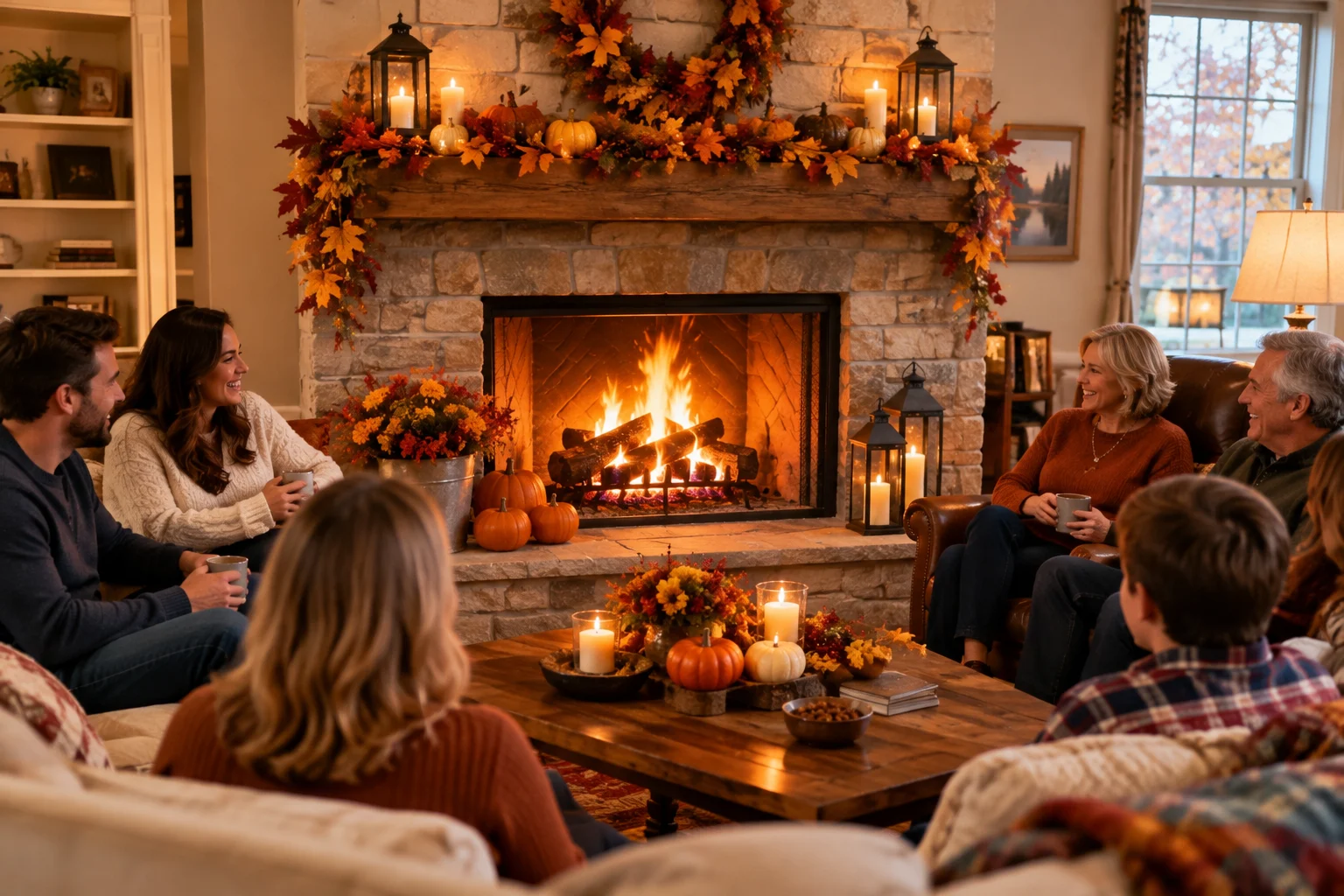
Why should you get a chimney inspection before Thanksgiving? Well, the best way to keep fireplace odors and cold drafts away this holiday is to schedule a chimney inspection. A certified chimney technician can find issues such as creosote buildup, damper slightly open and air pressure issues. These are some areas that the certified chimney technician can fix so your home stays warm and welcoming for family and friends.
Why Thanksgiving is the Perfect Time for a Chimney Inspection
Thanksgiving falls on Thursday, November 26, 2026. For many families, it is the first gathering of the holiday season and it may be the first time the fireplace gets used.
As your guests enjoy a warm, cozy fireplace, you don’t want a guest to whisper in your ear and say, “It’s really cold in there,” or “I don’t know what it is, but there’s a bad smell.” Guests do notice things like that. You want them to say, “That smells delicious!” While the kids ask, “When are we going to eat?”
A smoky odor from the fireplace or a chilly breeze near the fireplace cause unnecessary attention. The good news is that both issues can be resolved quickly, most often, if you have the right company like Superior Chimney to inspect the fireplace and chimney.
A chimney inspection this week can give you time for the certified chimney technician to come out, order a new damper or cap if needed, and finish any repairs well before the first guest rings the doorbell.
What Causes Fireplace Smells in the Home?
Most fireplace odors come from a combination of creosote and air moving the wrong way through the chimney flue. Let’s take a look at what’s happening.
Creosote Soaks into the Masonry
Every wood fire leaves the byproduct called creosote, a fuzzy and/or sticky, smelly “leave” behind on the inner walls of the chimney. Depending on the age and service of your chimney, the brick and mortar absorbs the creosote residue. It can go deep into the masonry ensuring the smell gets into the home.
A professional chimney sweep removes creosote from the surface of the brick, mortar and chimney liner. By removing this byproduct, it will lower the risk of a fire. However, know that some residue will remain inside the masonry. A chimney sweep will help to control it.
Air Pressure Pulls Odors into the Room
As Superior Chimney has discussed in articles over the years, the real reason for fireplace odors is air flowing down the chimney and into the house. The air carries the odor of creosote straight into your living room.
The Chimney Safety Institute of America has delivered this message for years. Its guidance points to added air in the home and a tight sealing, top mounted damper as the most effective ways to get rid of the problem(s).
What can change indoor air pressure? Here are a few ways it can occur.
- A new furnace, boiler, or water heater
- New windows, new doors, or a home addition
- Attic fans and/or other roof and ventilation changes
- Kitchen range hoods and dryer vent exhausts
- A neighboring building/structure that is taller
- Dampers that close loosely
When the Thanksgiving holiday hits, the kitchen range and the fan will run for hours. Let’s not forget the clothes dryer taking care of the table cloth, napkins and blankets. The furnace is going to go on and off a lot as the front door or garage door opens and closes all day.
Weather and Seasons
Odors often have a stronger smell on rainy days or if it’s humid outside. A late November rain or snow combined with a full house of people, can bring an odor. And no, it’s not your dad, uncle or cousin that stinks.
What Causes Cold Drafts from the Fireplace? A cold draft is outdoor air sliding down the chimney and into the living space. Superior Chimney identifies several common causes. Let’s take a look below.
| Cause | What Happens | Common Deterrence/Solution |
| Negative indoor pressure | Exhaust fans and forced air systems pull replacement air down the flue | Top sealing damper with bypass or draft fan |
| Stack effect | Warm air rises and escapes up high, drawing cold air in low | Tight sealing damper with bypass and air balance review |
| Exterior chimney location | A chimney on an outside wall stays colder and moves air downward | Top mounted damper with bypass and proper cap |
| Wind loading and downdrafts | Gusts push air into the chimney top | Wind resistant cap such as a Vacu Stack |
| Rain and humidity | Heavy, damp air settles down the flue | Chimney cap and waterproofing |
| Barometric changes | Outdoor pressure shifts change airflow direction | Professional assessment of the full system |
Negative pressure inside the home is the most common cause. Taller homes and homes with chimneys on exterior walls tend to feel the stack effect most often.
What Happens During a Chimney Inspection?
A chimney inspection thoroughly checks the fireplace, chimney flue, damper, chimney crown and cap. The Chimney Safety Institute of America (CSIA), the National Fire Protection Association (NFPA), and the International Residential Code all recommend a chimney inspection at least once a year.
The Chimney Safety Institute of America quotes the national standard by stating: “Chimneys, fireplaces, and vents shall be inspected at least once a year for soundness, freedom from deposits, and correct clearances.” NFPA 211 defines three inspection levels. Here is how they compare.
| Level | When It Is Used | What It Covers |
| Level I | Regular annual checkup with no changes to the system | Accessible parts of the chimney, structure, obstructions, and creosote |
| Level II | New appliance, fuel change, home sale, or after a weather event | Everything in Level I plus attics, crawl spaces, basements, and often visual documentation |
| Level III | When concealed areas need a closer look | Access to hidden sections of the chimney or building structure |
Most homes need a Level I inspection. If you recently replaced your furnace or water heater, a Level II inspection gives a bigger picture of how air moves throughout your home.
A Free 14-Point Inspection with Every Fireplace Sweep
Superior Chimney includes a free 14-point certified inspection with each fireplace sweep. This ensures that everything has been checked and you get a copy of it along with photo documentation. You’ll see the pictures while we’re there and then we’ll email them to you for your own records. Now you have documentation of what it looks like today, so if repairs are needed in the future, you’ll know exactly what happened.
Fixes That Keep Your Home Warm and Safe
If the chimney inspection identifies a problem and the cause, we’ll discuss the solution with you. The table below shows what works.
| Solution | Helps Odors | Helps Drafts | How It Works |
| Top mounted energy damper | Yes | Yes | Seals the chimney at the top to limit downward airflow |
| Chimney cap | Yes | Yes | Shields the flue from wind, rain, and animals |
| Vacu Stack cap | Yes | Yes | Uses wind to create upward draft in breezy locations |
| Professional sweep | Yes | Partly | Clears surface creosote and improves airflow |
| Enervex or Exhausto fan | Yes | Yes | Creates steady upward draft in the flue |
| Smoke guard | Yes | Partly | Lowers the fireplace opening for better smoke flow |
| Chimney Saver and Crown Coat | Yes | Partly | Waterproofs masonry and protects the crown |
| Stainless steel liner | Yes | Yes | Creates a smooth, sealed flue for better draft |
A tight sealing, top mounted energy damper is often the deterrence solution for both odors and drafts. It seals the chimney at the top, keeping the outside air outside!
Making a Thanksgiving Plan Planning ahead keeps the holiday front and center! Here’s a guideline for you to use:
| When | What to Do |
| Early September | Call to book your inspection and sweep |
| Two to three weeks out | Complete the inspection and review the photo report |
| Ten to fourteen days out | Install any recommended damper, cap, or repairs |
| Weekend before Thanksgiving | Light a small test fire and check for odor and airflow |
| Thanksgiving Day | Open the damper before lighting and enjoy a warm, cozy fire |
A Message from the Field
From our Technicians experience in the field, the fireplace is not just the only factor. The whole house works as one air system, and a new kitchen hood, new furnace or new energy efficient windows/doors can change how the chimney works.
That’s why we look beyond the fireplace. We inspect the damper seal, the chimney cap, the chimney crown, and the appliances. After the inspection, we’ll know which solution fits the way your home actually ‘breathes’.
Before the Holiday and Guests Walk Through the Door…
- Book a certified chimney inspection
- Confirm the damper opens fully and closes evenly and tight
- Check that the chimney cap is secure and intact
- Burn only seasoned, dry hardwood
- Open the window a bit when running the oven fan and fireplace together
- Keep a fireplace screen in place while the fire is lit
- Test smoke and carbon monoxide alarms for safety
Frequently Asked Questions
How far before Thanksgiving should I schedule a chimney inspection?
If possible, two to three months before the holiday is perfect. That leaves time to install a new damper, chimney cap, or other recommendation from the technician.
Will a chimney sweep alone remove the fireplace smell?
A chimney inspection certainly helps! It gets rid of any byproducts like creosote and improves safety. If something more is needed, the chimney technician will let you know if a damper is needed.
Why does my fireplace smell more when the kitchen is busy?
Oven hood running the fan and other exhaust fans pull air out of the house. New air then comes down the chimney, bringing creosote odors along.
What is the best fix for a cold fireplace draft?
A top mounted energy damper with a bypass is a great choice. It seals the flue at the top, keeping warm air in your home.
How often should a chimney be inspected?
CSIA, NFPA, NCSG and the International Residential Code recommend an inspection at least once a year.
Is a chimney inspection required when buying or selling a home?
NFPA 211 calls for a Level II inspection upon the sale or transfer of a property. It gives buyers and sellers a clear view of the chimney condition.
Key Takeaways
- Fireplace odors usually come from creosote combined with air flowing down the chimney.
- Cold drafts are often from indoor pressure, the stack effect, wind, and rain.
- A chimney inspection identifies the cause. Now you can choose the right solution.
- Top mounted dampers, chimney cap, and draft fans can deter both odors and drafts.
- Scheduling two to three months before Thanksgiving keeps the holiday stress free.
Schedule Your Holiday Chimney Inspection Today
Superior Chimney is CSIA certified and is affiliated with the National Chimney Sweep Guild, the International Code Council, and the NFPA. Homeowners rate the company 4.9 out of 5 stars across more than 1,570 reviews.
Call 877.244.6349, Monday through Friday from 8:00 AM to 5:00 PM, or submit a service inquiry online for a no obligation quote. Every chimney inspection includes a free 14 point inspection with photos.
Happy Thanksgiving!