


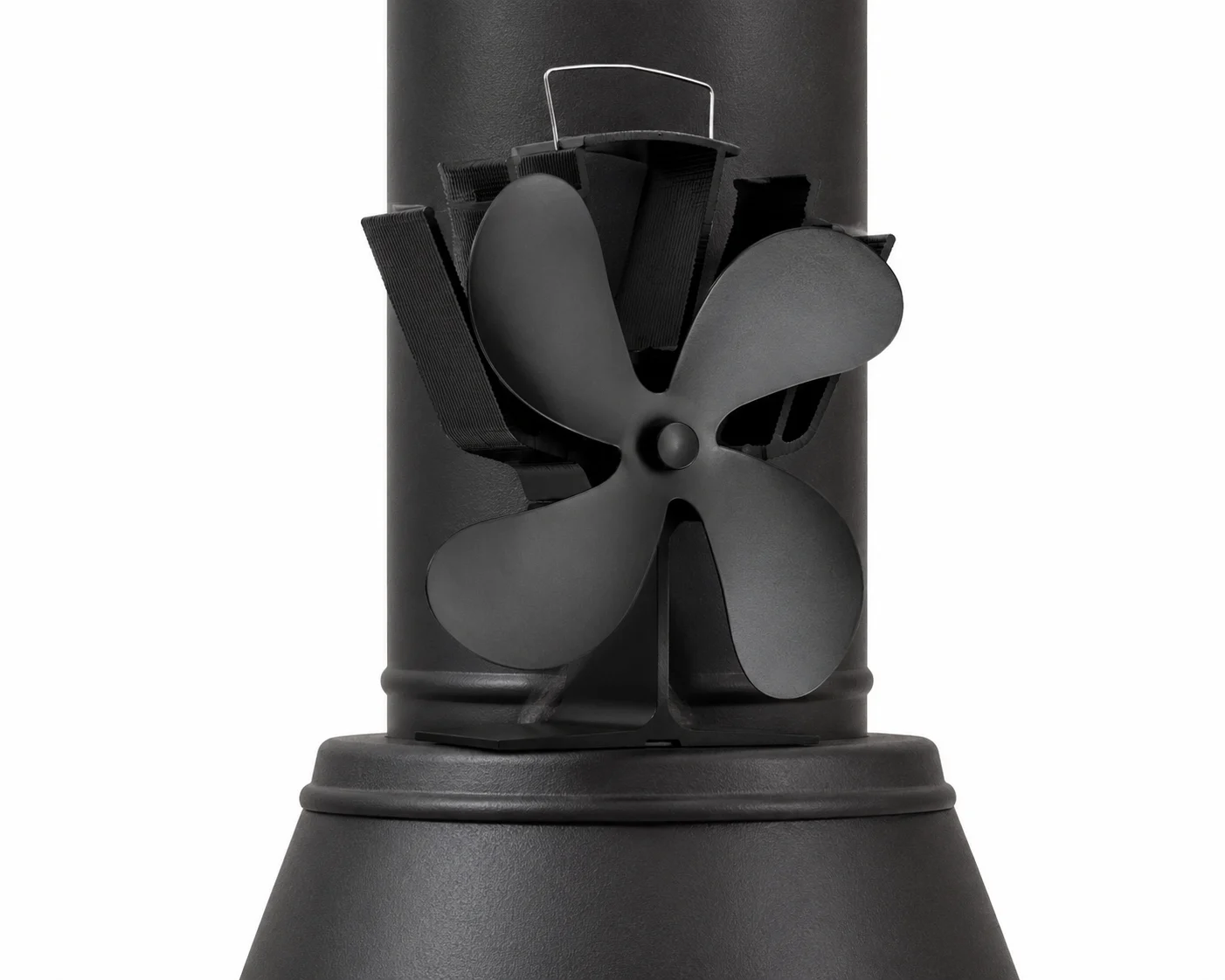
Over the winter and spring season, smoke was a common occurrence at my neighbors house. Since they are new to homeownership, they didn’t realize smoke was to go outside, and nothing was to backtrack inside. When there’s a smoke problem from the fireplace, question it. The answer can be as simple as a fireplace fan.
A fireplace fan is a mechanical exhaust fan, often called an Exhausto fan, Enervex fan, or chimney extractor fan, that mounts on top of a chimney to pull smoke up and out of your home. It corrects the draft process caused by undersized flues, low chimney height, or negative pressure inside the home. Now that you know what it is in a nutshell, let’s take a closer look.
What Is a Fireplace Fan?
A fireplace fan is a powered ventilator installed at the top of a chimney flue. This is different than a chimney cap. A chimney cap protects from animals, weather elements and debris from entering your home. A fireplace fan actively draws air and combustion gases up and out of the house.
These fans go by several names depending on the manufacturer and region. You may see them listed as:
• Exhausto fans
• Enervex fans
• Fireplace chimney fans
• Flue fans
• Chimney extractor fans
Regardless of the name, the function is the same: create enough draft to overcome whatever it is preventing the chimney from extracting the smoke naturally.
Why Do Chimneys Smoke?
Before choosing a fan, it helps to understand what actually causes smoke to enter a living room from the chimney. According to chimney physics research published by the Chimney Safety Institute of America (CSIA), venting problems generally fall into a small number of categories: spillage, back drafting, flow reversal, wind induced downdraft, and inadequate flow.
Spillage happens when some combustion gases escape into the room while the rest continue moving up the chimney. It is often the first sign of a draft problem.
Back drafting is a more serious problem. The CSIA describes it as a condition where chimney flow is fully reversed. Now all of the gases go into your home and nothing goes outside.
Negative pressure inside the home is one of the most common causes. Modern homes are sealed tightly for energy efficiency. Range hoods, bathroom fans, and clothes dryers all exhaust air outward. The air needs to be replaced from somewhere. In a tight house, the best path is often from the chimney flue.
Other contributors include an undersized or oversized flue, a chimney that goes beyond the roofline, or a fireplace design that is just hard too vent such as a corner unit.
How a Fireplace Fan Solves Problems
A fireplace fan replaces the natural draft with a mechanical draft. The mechanical fan can 0extract air and smoke from the flue and get rid of it at the top of the chimney.
This matters because the fan fixes the pressure problem (in the chimney). A properly sized fireplace fan will:
• Establish negative pressure inside the flue so smoke has nowhere to go but up and out
• Operate regardless of wind direction or outdoor temperature
• Allow speed adjustment from inside the room to match fire size and airflow needs
Types of Fireplace Fans
Most residential fireplace fans fall into one of two categories: rooftop mounted extractor fans (the Exhausto and Enervex style units) and inline or booster fans installed lower in the flue system.
The table below compares the two approaches.
Feature
Rooftop Exhausto/Enervex Style Fan
Inline Booster Fan
Mounting location
Top of chimney, above the flue
Mid-flue or near the appliance
Draft correction
Corrects negative pressure at the source
Assists draft but does not fully isolate the flue
Noise level
Very low, comparable to a light fixture
Varies, can be more noticeable indoors
Best suited for…
Corner fireplaces, see through units, low termination height, chronic back drafting
Mild draft weakness in otherwise well designed systems
Speed control
Variable, adjustable from the room
Often single speed
Maintenance
Sealed, air cooled motor, minimal upkeep
Depends on model, some require more frequent servicing
Fireplace Fan Features
Rooftop fireplace fans are made to run continuously with minimal maintenance. Typical specifications include a 120v motor, air cooled and pre-lubricated sealed ball bearings, a prewired junction box for straightforward electrical connection, an integrated bird screen, and a variable speed control mounted near or by the fireplace.
Component
Function
Sealed ball bearing motor
Reduces maintenance and extends service life
Bird screen
Prevents nesting and debris intrusion at the flue opening
Variable speed control
Lets the homeowner adjust draft strength by fire size
Prewired junction box
Simplifies electrician installation
Weatherproof housing
Can typically be finished in a range of colors to match roofline or trim
Energy Use and Noise
One of the advantages of a fireplace fan is its low operating cost. Since the motor only needs to move air, little energy is needed. The suggested brands of fireplace fans have the motor enclosed which keeps the noise low enough that homeowners tell us that it’s more of a low background hum, if you’re listening for it.
Installation
Fireplace fan installation should be done by a certified chimney technician like Superior Chimney, since it involves flue sizing, electrical wiring, and rooftop work. A qualified, certified installer will:
1. Inspect the existing flue for size, search for any obstructions and inspect the liner condition
2. Rule out other contributing causes, such as an undersized damper opening
3. Select a fan rated for the flue’s cross sectional area and expected draft deficit
4. Wire the unit to a dedicated switch or speed control inside the home (certified electrician)
5. Test the draft performance with real fire conditions
Everything goes back to a fireplace or chimney cleaning. Skipping a chimney inspection is one of the most frequent reasons a fireplace fan doesn’t perform to its potential. Schedule your chimney inspection.
Fireplace Fan vs Other Draft Solutions
Homeowners dealing with smoke problems often consider several fixes before choosing to install a fireplace fan. It helps to see what they are and how they compare.
Solution
Addresses Negative Pressure
Invasiveness
Typical Use Case
Fireplace fan
Yes, directly
Low, rooftop mounted
Chronic or hard to diagnose smoke problems
Chimney extension
No, only changes height, possible deterrence
Moderate to high
Wind induced downdraft from nearby structures
Flue relining / resizing
Partially, not direct
High
Oversized or undersized flue confirmed by inspection
Outdoor combustion air kit
Yes, by supplying makeup air
Moderate
Tightly sealed homes with strong exhaust appliances
Glass fireplace doors
No
Low
Reducing room air loss, not a draft fix on its own
A fireplace fan is most times the easiest, cost effective and less invasive solution where smoke problems keep happening.
Frequently Asked Questions
Does a fireplace fan eliminate smoke completely?
A correctly sized and installed fireplace fan is designed to create enough mechanical draft to overcome negative pressure and pull combustion gases out of the flue. This process removes the smoke and takes it up and out of your home.
How loud is a fireplace fan?
Depending on the brand, the one’s we recommend are built to run silent.
Can a fireplace fan double as a ventilator?
Yes. Because the fan pulls air through the flue, many homeowners run it on low speed with the damper open to clear stale odors, cigarette smoke, or cooking smells from the room, even if there’s no fire burning.
Does the flue size still matter if I install a fan?
Yes. A fireplace fan helps with the pressure problems, but an undersized or damaged flue liner should still be inspected by a certified technician.
Finally…
A fireplace fan is a mechanical solution for chimney draft problems that are challenging to fix. Contact Superior Chimney at 877-244-6349 to schedule a chimney inspection to understand if a fireplace fan is the right solution for you and your home.