


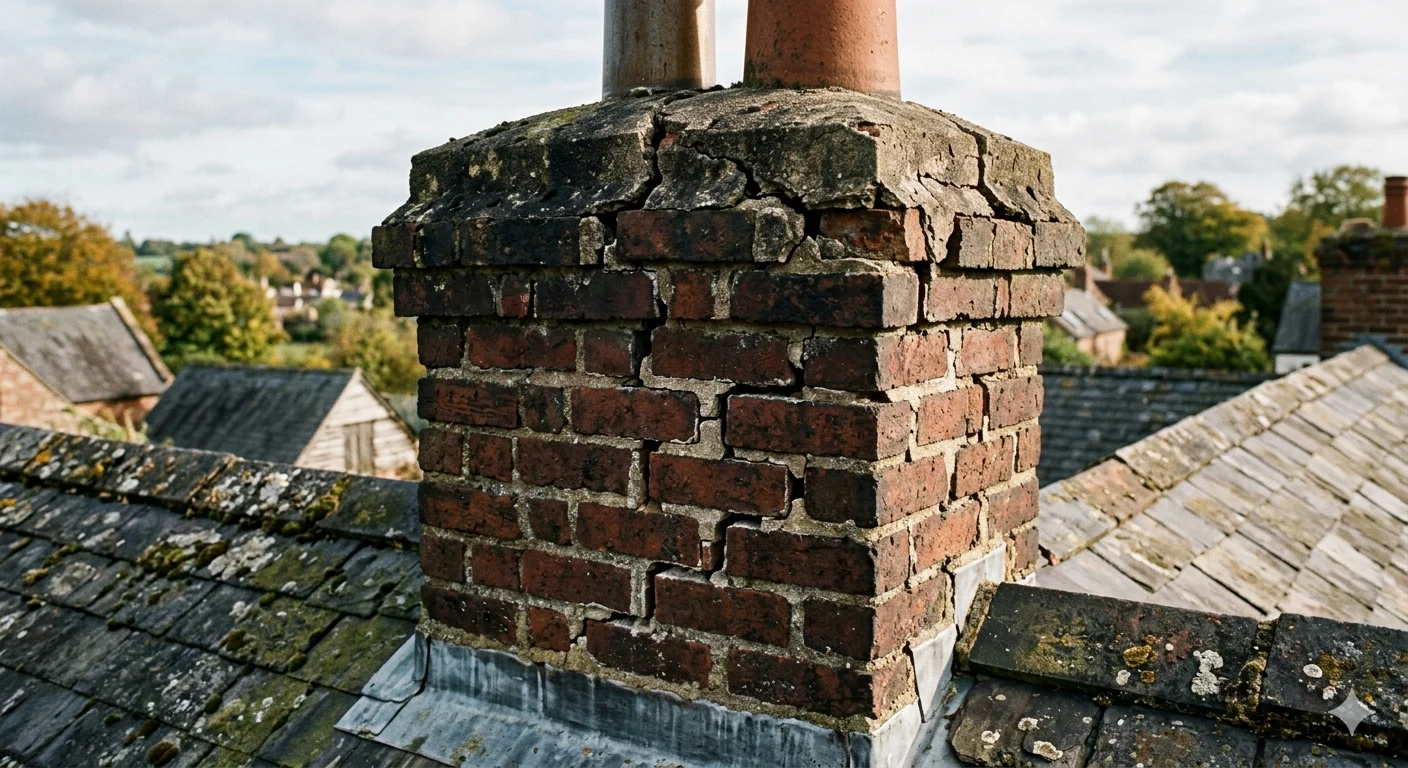
We’ve had enough of Winter. Are you ready for some Spring temperatures? Spring is the wake- up call to nature. The grass begins to show hints of green, daffodils growth peek from the ground and chimneys show their cracks. All of these things will begin to happen regardless if the days are warmer and the nights are ice cold. Chimneys are unlike nature, it reacts to the temperature swings with expansion and contraction of the chimney masonry materials. How does it work and what can be done about it? Let’s take a closer look.
Spring Expansion and Contraction Cracks Chimney Masonry
Chimney masonry is a porous material that gets affected by the warmth of temperatures, which causes the material to expand, and when night time comes and temperatures cool or get cold, the material contracts. This accordion like movement weakens the chimney masonry material and forms small, hairline cracks to much larger ones allowing for weather elements like snow and rain to enter the chimney system.
As the elements settle into the cracks, combined with the expansion and contraction, it erodes and breaks the materials causing issues with the integrity of the chimney. Not only does it let in water, ice and snow, it also can create damage to the inside of your home in the form of water leaks.
Early Detection and Correction
Now that it is Spring, this is the perfect time to schedule your chimney inspection. Now that we know how weather elements cracks chimney masonry, what can be done about fixing the issue.
Start by getting a chimney inspection. A certified chimney technician will visit your home to clean and check the fireplace, chimney flue, and the exterior chimney. There are numerous areas in each of the three sections that the technician inspects, but let’s focus on the exterior chimney in this article.
Superior Chimney has a team of chimney masonry professionals that specialize in repairing chimney masonry.
1. Chimney Crown: The chimney crown is the concrete slab that covers and overlaps the brick, stone or siding of the chimney. The job of the chimney crown is the direct water, snow and debris away from the chimney. Its next job is to ensure that any water refrains from leaking into the chimney. If a hairline crack or larger forms on or in the chimney crown, these become entry points. When water enters these cracks, it begins to break down the materials allowing more water to enter. The cumulation can begin to enter your home and create damage and stains on your walls.
2. Tuckpointing: Tuckpointing is the process of repairing the filler in between brick or stone to block the elements from entry. It may sound like an easy task, but the process is a form of artwork in order for it to protect properly and look in unison with the rest of the chimney and home.
Issues can occur within the materials, including spalling, missing chunks, and cracks. In some cases, the material may separate or pull away from the brick, stone, or concrete surfaces. To avoid this from happening, a chimney inspection will identify any issues and schedule corrective action with a masonry expert.
3. Waterproof the Chimney: To extend the longevity of the chimney for the next 10 years, ask Superior Chimney about Chimney Saver. It is a spray, liquid application that goes directly onto the bricks and chimney crown. The liquid fills in the gaps of the porous cement so no outside water or contaminants can erode the mortar.
To get a chimney inspection completed with a full 14 point inspection, contact Superior Chimney today to schedule your appointment. It’s better to get it checked and addressed now before the Spring rains begin. Contact us today at 877-244-6349.